
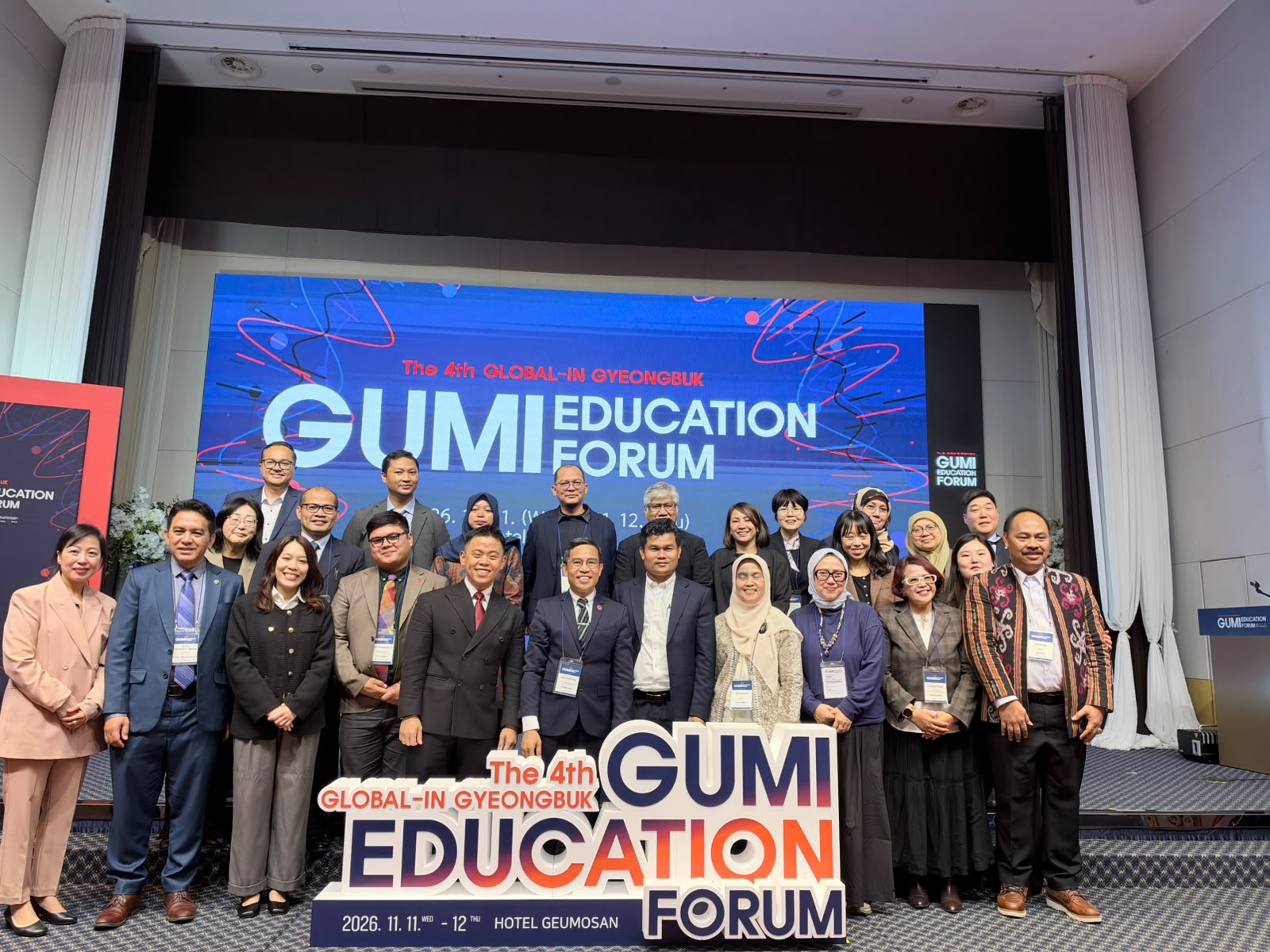
Gumi, South Korea – The use of artificial intelligence (Artificial Intelligence/AI) in education was not enough if it focused only on the use of technology. Education transformation required connections among policy, leadership, infrastructure, educational institutions, educators, learners, and industry. This perspective was one of the main concerns during the organization of The 4th Gumi Education Forum which took place on 11–12 November 2026 in Gumi, Gyeongsangbuk-do, South Korea.
The forum, themed “Building Intelligent Ecosystems: Connecting Policies, Systems and Practices,” brought together education leaders, policymakers, university and school leaders, researchers, students, technology practitioners, and international partners from Southeast Asia, South Korea, China, and various other countries. At the event, Prof. Vina Adriany, M.Ed., Ph.D., Director of SEAMEO CECCEP, also participated in regional and international dialogues on developing education ecosystems that were adaptive to technological developments.
The forum raised an important issue in today's education transformation: how could it be ensured that the development of AI truly benefited the learning process and the improvement of education quality? The presence of technology did not automatically guarantee positive change. What was needed were appropriate policies, institutional readiness, educator competence, access to digital infrastructure, and an evaluation system capable of ensuring that technology was used responsibly.
Over the two days of the event, the forum featured keynote speeches, high-level discussions, cross-country sharing of good practices, dialogues between students and education leaders, and on-site visits to schools and industrial environments. This series of activities was designed to connect discussions on education policy and systems with the real-world application of AI in classrooms and workplaces.
One of the key agendas was the exchange of experiences among the 11 SEAMEO member countries. Through the good-practice sharing sessions, participants had the opportunity to present their experiences, compare approaches to digital transformation, and identify practices that had the potential to be developed and adapted across Southeast Asian countries. This exchange also opened up space to build regional collaboration in addressing education challenges in the digital era.
In addition, discussions on the responsible implementation of AI received significant attention. The use of AI in education needed to be accompanied by strengthened capacity among educators and institutions, clear governance, and evidence-based decision-making. In this way, technology was not only a learning aid but could also support the development of education systems that were more responsive to learners' needs.
On the second day, participants visited South Korean schools that applied AI or advanced digital learning approaches, as well as industrial sites in Gumi. These activities provided an opportunity to observe how AI was used in learning, school management, skills development, and changing workforce needs. Participants also visited Kyungwoon University to hold dialogues and reflect on opportunities for cooperation among universities, industry, and international partners.
Prof. Vina Adriany's participation in the forum was part of SEAMEO CECCEP's involvement in strengthening knowledge exchange and international collaboration in education. The various perspectives discussed at the forum were expected to enrich understanding of the importance of building an education ecosystem that was oriented not only toward technological progress but also toward the quality of learning, the readiness of human resources, and the needs of learners.
Through this forum, one thing became increasingly clear: the future of education was determined not only by how advanced the technology used was, but also by how well all elements of education were able to work together. The connections among policy, institutions, educators, learners, and industry became an important foundation for realizing education transformation that was inclusive, responsible, and sustainable.
Share This News