
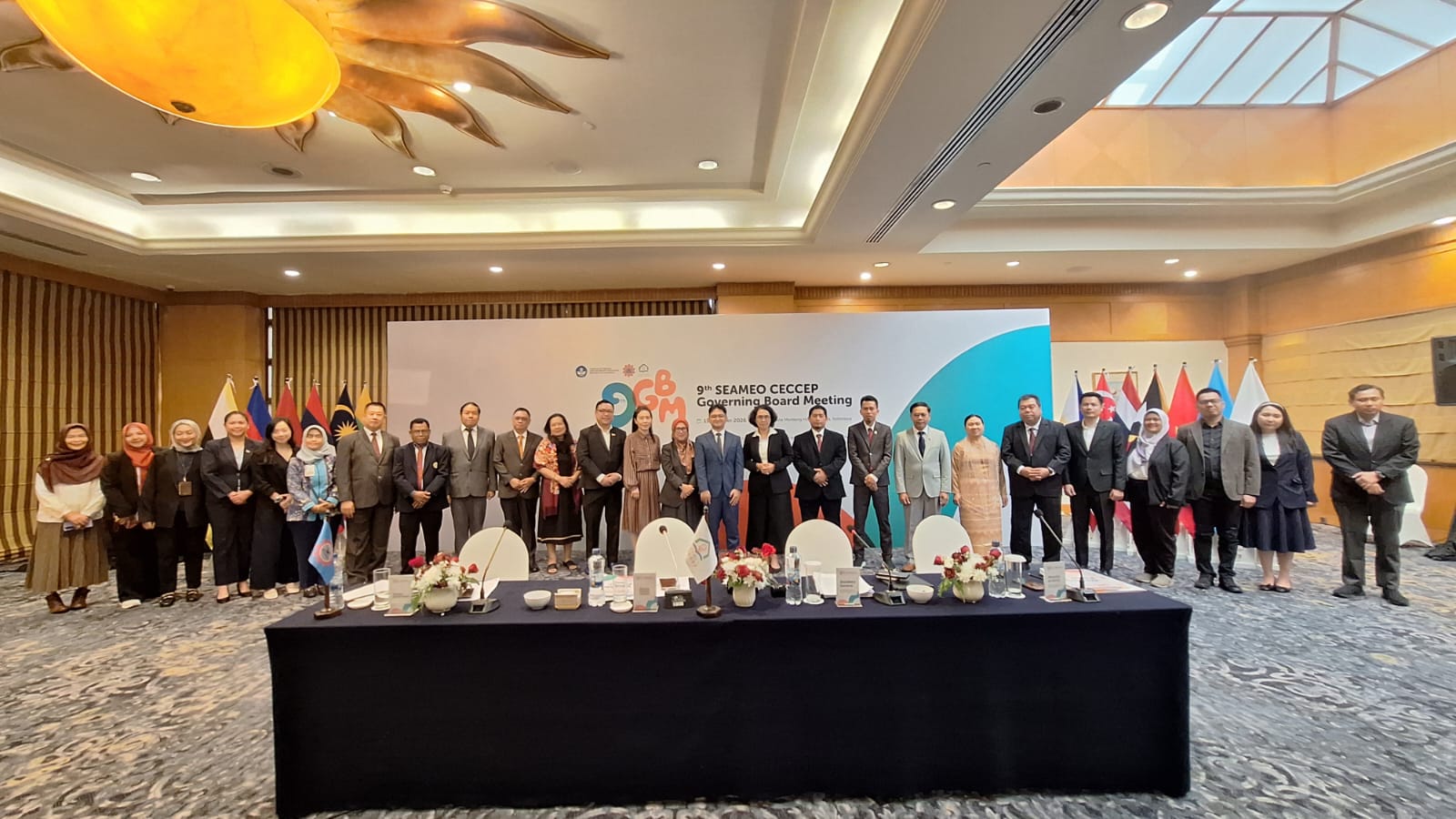
Jakarta, Indonesia, 19 October 2026-The SEAMEO Regional Centre for Early Childhood Care and Education (SEAMEO CECCEP) reaffirmed its commitment to advancing equitable access to quality early childhood care and education (ECCE) across Southeast Asia at its 9th Annual Governing Board Meeting, held in Jakarta, Indonesia. The meeting brought together Governing Board Members, representatives of Indonesia’s Ministry of Primary and Secondary Education and Directorate of Early Childhood Education, the SEAMEO Secretariat, the Centre’s Advisory Board, representatives of SEAMEO regional centres in Indonesia, development partners, and invited guests to review the Centre’s achievements and strengthen regional collaboration in early childhood education and parenting.
In his remarks, SEAMEO Secretariat representative Alejandro Ibanez emphasised that the Governing Board Meeting (GBM) served as a strategic forum for translating SEAMEO’s regional priorities into concrete action and meaningful impact. He highlighted the importance of keeping SEAMEO programmes relevant amid the rapid development of artificial intelligence (AI) and changes in working practices, communication, and knowledge sharing. He noted that strengthening institutional capacity, evidence-based research, innovation, and strategic partnerships was essential to ensuring that SEAMEO programmes could respond to the evolving needs of Member Countries in a sustainable manner. He also encouraged regular programme monitoring to assess progress and identify areas for improvement. Furthermore, he commended SEAMEO CECCEP’s commitment to supporting SEAMEO’s regional priorities and called on all Governing Board Members to continue supporting the Centre’s leadership and management in achieving its strategic objectives and delivering meaningful impact on education across Southeast Asia.
The meeting was officially opened by Ir. Suharti, Ph.D., Secretary General of Indonesia’s Ministry of Primary and Secondary Education. In her remarks, she emphasised the importance of strengthening SEAMEO CECCEP’s role in improving the quality of early childhood education and services through programmes that responded to the needs of Member Countries. She also highlighted the GBM as an important opportunity to review programme implementation, strengthen regional collaboration, and formulate strategic actions to improve the quality of early childhood education services.
Suharti also highlighted the importance of expanding access to and improving the quality of early childhood education. She pointed to Indonesia’s 13-Year Compulsory Education policy, which includes one compulsory year of pre-primary education, as a strategic measure to ensure that more children have opportunities to learn from an early age. These efforts are also supported by the Indonesia Smart Card Program (Program Indonesia Pintar or PIP), which helps expand educational access for children from families in need, and the Partisipasi Semesta programme, which encourages the involvement of government, families, communities, and other stakeholders in early childhood education. She stressed that expanding access needs to go hand in hand with strengthening educators’ competencies and providing safe, inclusive learning environments that support children’s growth and development.
In line with these priorities, SEAMEO CECCEP Director Prof. Vina Adriany, Ph.D., highlighted the Centre’s achievements throughout the 2025/2026 fiscal year in research and development, capacity building, policy advocacy, and regional partnerships. She emphasised the importance of collective efforts to ensure that every child has access to quality early childhood care and education services and that children and families across Southeast Asia receive the support they need to thrive. The Centre also continued to support government efforts to strengthen early childhood education services through knowledge contributions and collaboration relevant to policy development.
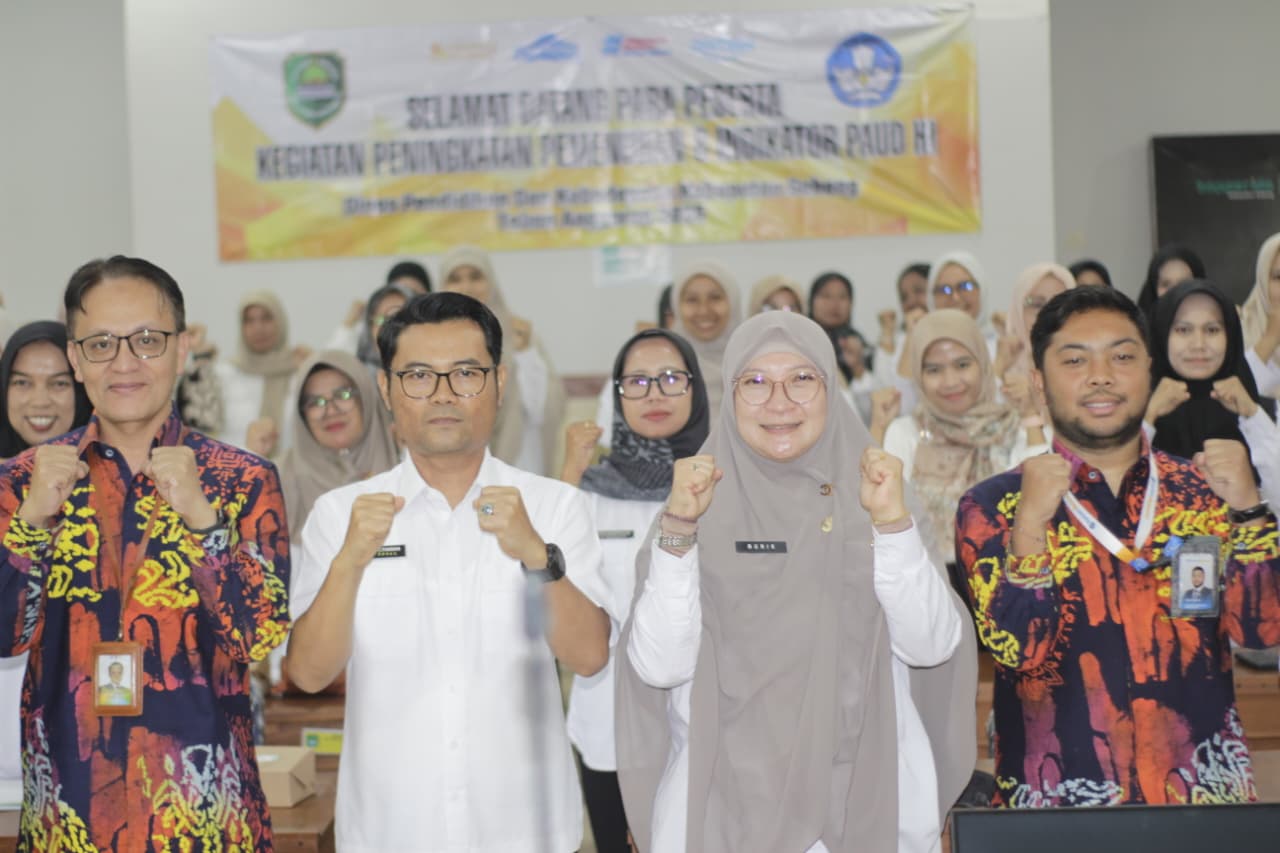
To strengthen regional cooperation, SEAMEO CECCEP supported the dissemination of the ASEAN–SEAMEO Joint Roadmap on Early Childhood Care and Education in Southeast Asia as a shared framework for advancing inclusive, equitable, and quality ECCE systems. At both national and regional levels, the Centre also continued its advocacy for Holistic and Integrated Early Childhood Development (Pengembangan Anak Usia Dini Holistik Integratif or PAUD HI) and supported knowledge exchange and policy dialogue through the Centre Policy Research Network (CPRN). These initiatives strengthened the links between knowledge, policy, and practice to address the needs of children and families in diverse contexts.
In research and development, SEAMEO CECCEP continued to generate knowledge on strategic issues in early childhood education and parenting. Its research areas included ethnoparenting, which explores parenting practices rooted in local values and wisdom; Anti-Bias Education, which promotes more inclusive and discrimination-free learning environments; and the development of early childhood numeracy skills.
The Centre also explored the use of artificial intelligence (AI) in early childhood education, particularly in relation to educator competencies and the appropriate use of technology, while keeping children’s needs and best interests at the forefront. These studies formed part of the Centre’s efforts to generate contextualised and relevant knowledge to inform policies and practices that are inclusive, high-quality, and responsive to the diverse needs of children and families across Southeast Asia.
Strengthening the capacities of educators and other professionals was another important part of the Centre’s work. During the reporting period, SEAMEO CECCEP conducted various professional development activities, including training for teachers in Malaysia using the Our Happy Neighbourhood module, professional development training for prospective early childhood education lecturers in Cambodia in 2025, and inclusive education training in collaboration with Hiroshima University. Regional webinars and workshops also provided opportunities for stakeholders to share experiences, broaden their perspectives, and strengthen professional networks in the ECCE sector.
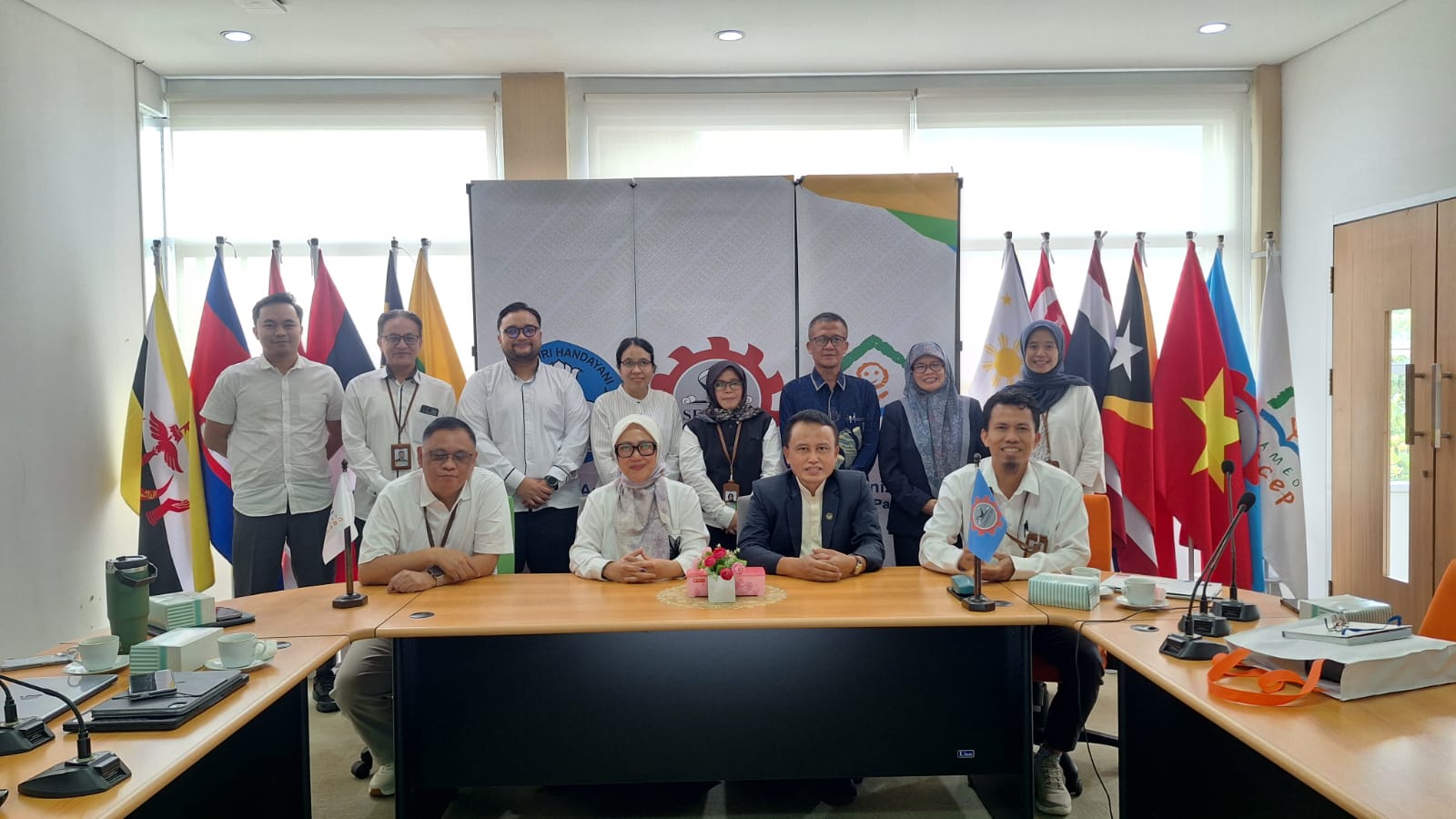
Recognising that progress in early childhood education and parenting requires sustained collaboration, the Director of SEAMEO CECCEP expressed her appreciation to Kurniawan, S.T., M.B.A., Director of Early Childhood Education at the Directorate General of Early Childhood, Primary, and Non-Formal Education (PAUD Dikdasmen), for his continued cooperation and support. Contributions from partners helped strengthen the Centre’s programmes and advance collective efforts to promote equitable access to quality early childhood care, education, and parenting services across the region.
The 9th Governing Board Meeting provided a forum for Members to discuss programme implementation, determine strategic priorities, and strengthen the Centre’s future direction for collaboration. Through effective governance, knowledge exchange, and sustainable partnerships, SEAMEO CECCEP, together with Member Countries and partners, continued to work towards more inclusive, high-quality, and responsive early childhood education and parenting systems, ensuring that every child in Southeast Asia has the opportunity to grow, learn, and thrive.
The SEAMEO Regional Centre for Early Childhood Care and Education (SEAMEO CECCEP) is a regional centre under the Southeast Asian Ministers of Education Organization (SEAMEO), focusing on early childhood care and education and parenting. Based in Lembang, West Java, Indonesia, the Centre was established in 2017 and strives to become an internationally recognised centre of excellence through four key areas of work: evidence-based research, capacity building for educators, policy advocacy, and sustainable regional partnerships.
Contact person:
[email protected]
[email protected]
+62 881-2919-729
Share This News