
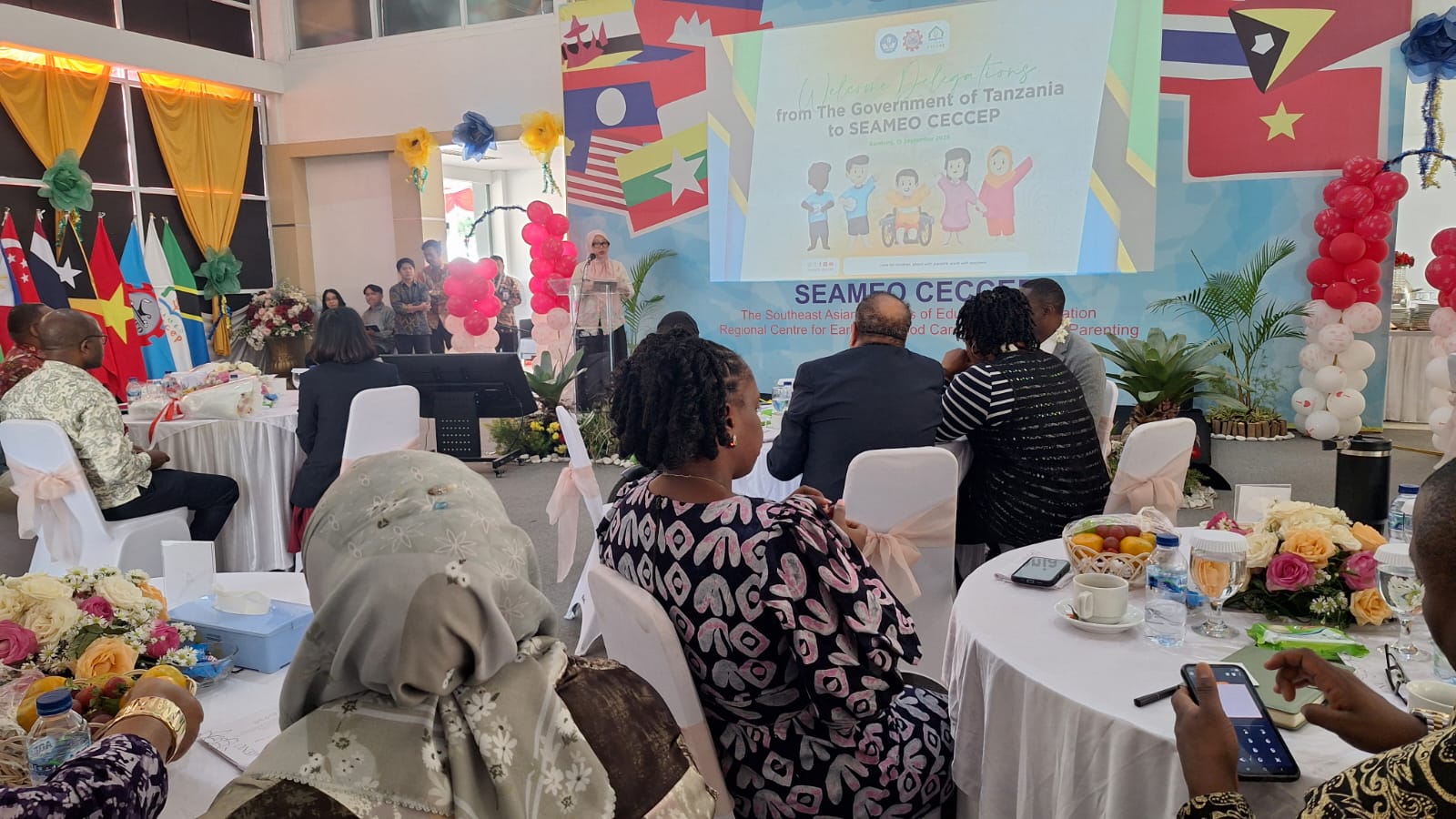
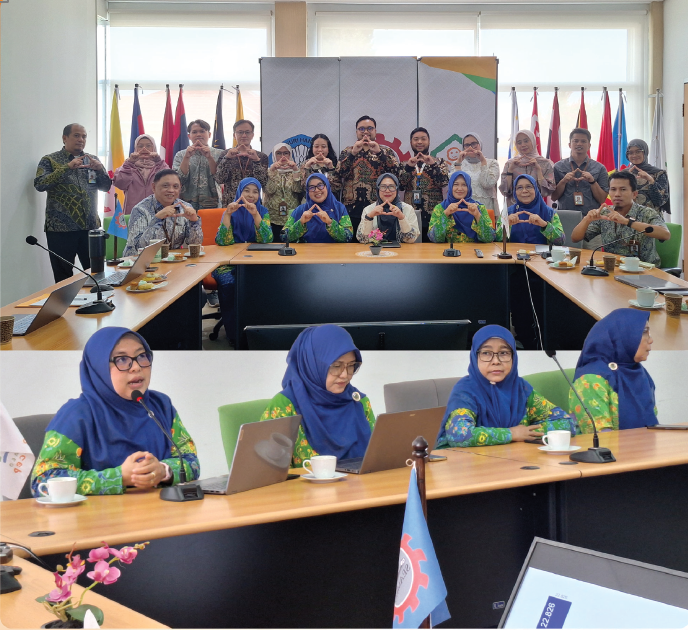
Lembang, Indonesia – 15 September 2026 SEAMEO Regional Centre for Early Childhood Care Education and Parenting (SEAMEO CECCEP) welcomed representatives from the Embassy of the United Republic of Tanzania in Indonesia for a knowledge exchange visit focused on strengthening early childhood care and education (ECCE). The visit provided an opportunity for both parties to share experiences, discuss ECCE approaches, and explore potential areas of future collaboration in supporting children and families.
The visit reflected the importance of international knowledge exchange and collaboration in advancing quality, inclusive, and sustainable early childhood development. Through this engagement, SEAMEO CECCEP introduced its role as a regional knowledge hub that supports ECCE development through research, advocacy, capacity building, and knowledge dissemination.
During the discussion, both parties highlighted the importance of a holistic approach to early childhood development, which integrates education, health, nutrition, responsive caregiving, family engagement, and community participation. The exchange emphasized that strengthening ECCE requires collaboration among various stakeholders, including governments, communities, educational institutions, and development partners.
Director of SEAMEO CECCEP, Prof. Vina Adriany, M.Ed., Ph.D., welcomed the visit and emphasized the importance of cross-country learning and collaboration in advancing ECCE.
“There are many opportunities for us to work together. We can learn from each other’s experiences, particularly in areas related to community participation, caregiver capacity, health, and child development,” she stated.
Prof. Vina highlighted that community-based approaches and collaboration across sectors are essential to ensuring sustainable support for children and families. She explained that experiences from different countries can provide valuable insights for strengthening early childhood development systems while considering each country’s unique social and cultural contexts.
Representing the Embassy of the United Republic of Tanzania in Indonesia, Mr. Suleiman Ahmed Saleh, expressed appreciation for the opportunity to learn from Indonesia’s ECCE practices. He explained that the visit aimed to understand how early childhood centres were developed and managed, as well as how communities were involved in supporting children’s development. Mr. Suleiman highlighted Tanzania’s interest in learning from Indonesia’s experiences, particularly in relation to community involvement, early childhood service delivery, and approaches to strengthening support systems for children and families.
Mrs. Abeida Rashid Abdallah, Principal Secretary of the Ministry of Community Development, Gender, Elderly and Children, also expressed appreciation for the opportunity to continue Tanzania’s learning journey in Indonesia. She explained that the visit provided valuable insights into Indonesia’s approaches to early childhood care, development, and education.
Through engagement with SEAMEO CECCEP, the Tanzanian representatives explored how research, evidence-based practices, capacity development, quality assurance, and community-based approaches could be translated into effective services for children and families.
“For Tanzania, this learning opportunity came at an important time. We recognize that investment in early childhood development is an investment in human resources and the long-term development of a country,” she stated.
Mrs. Abeida explained that strengthening early childhood development aligned with Tanzania’s national development priorities, including the Tanzania Development Programme and Tanzania Vision 2050. Tanzania has continued to expand childcare services through various initiatives, including the development of community-based childcare centres.
As part of these efforts, Tanzania has implemented initiatives to strengthen community-based childcare services through a holistic approach integrating education, health, nutrition, child protection, and family support. Tanzania has also developed policies and programmes to expand access to quality early childhood services that are inclusive, sustainable, and responsive to local contexts.
During the visit, SEAMEO CECCEP also presented its programmes and areas of expertise in supporting ECCE development in Southeast Asia. Widodo Suhartoyo, Deputy Director of SEAMEO CECCEP, introduced several areas of mutual interest, including early childhood workforce development, community-based early childhood development models, parent and family engagement, child protection, evidence-based research, monitoring and quality assurance, capacity building, knowledge sharing, digital innovation, and sustainable financing for ECCE.
He highlighted that ECCE development should continue to explore emerging opportunities, including the use of digital technology and artificial intelligence (AI) to support early childhood services.
“Digital technology and AI can support and strengthen early childhood development services. However, financing and sustainability remain important aspects to ensure that programmes can continue and provide long-term benefits,” he explained.
The discussion also explored Tanzania’s experience in implementing a holistic approach to early childhood development. Mr. Ali Omar Sleiman, ECD Specialist from the Ministry of Community Development, Gender, Elderly and Children, shared Tanzania’s efforts in integrating the Nurturing Care Framework into its early childhood development system.
He explained that the framework consists of five key components: good health, adequate nutrition, opportunities for early learning and stimulation, responsive caregiving, and safety and security. These components require collaboration among governments, communities, civil society organizations, and development partners. Tanzania has implemented the National Multisectoral Action Plan and developed policies and guidelines related to health, nutrition, child protection, and childcare services to strengthen support for young children and families.
The discussion also covered areas of mutual interest, including early childhood workforce development, parenting education, evidence-based research, quality assurance, digital innovation, and sustainable financing for ECCE. Both parties recognized the importance of continued knowledge exchange and collaboration to strengthen early childhood development.
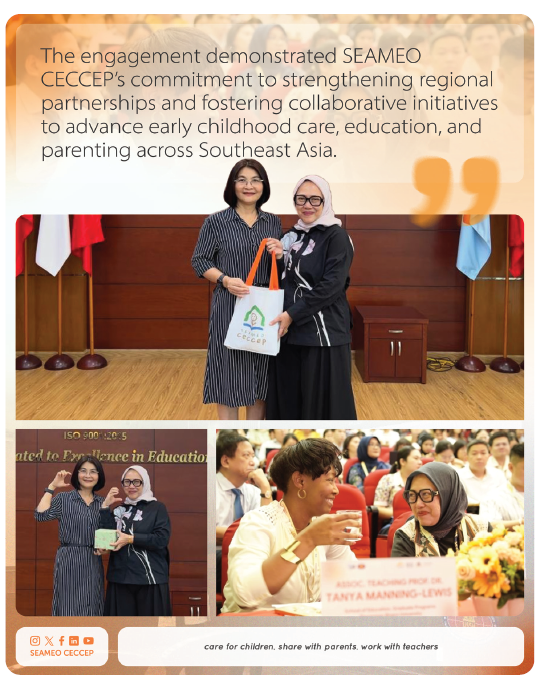
Through this visit, SEAMEO CECCEP and representatives from Tanzania strengthened mutual understanding of ECCE initiatives in both countries and explored opportunities for future collaboration. SEAMEO CECCEP continues to welcome collaboration with national and international partners to support the development of inclusive and sustainable ECCE systems, ensuring that children and families receive the support needed during the early years of life.
Share This News